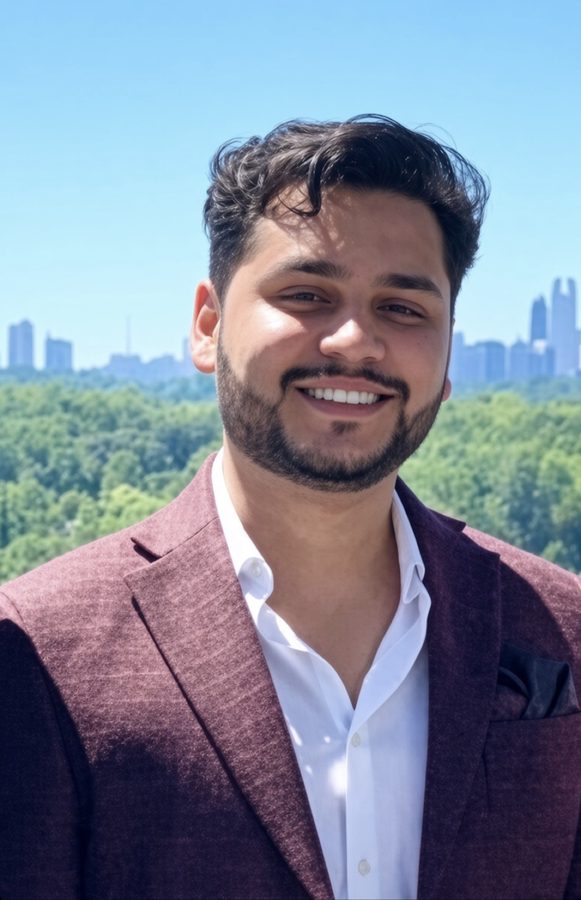
I'm an Atlanta-based biopharma intelligence leader. I turn deals, data, and regulatory chess moves into decisions people can act on.
My career spans Biogen, PhRMA, AmerisourceBergen (now Cencora), EVERSANA, and Vir Biotechnology. Today, I'm a Director of Competitive Intelligence at a leading life sciences advisory firm, where I advise clients across the spectrum — from multi-billion-dollar pharmaceutical companies to smaller biotechs.
I hold an MPH in Health Policy and Management from Emory University, home of the Rollins School of Public Health, ranked #2 in the nation by U.S. News & World Report, and an MBA in Healthcare Management from the University of Arizona, ranked #7 in the nation by U.S. News & World Report.
My path in public health began at Georgia State University, where I earned a Bachelor of Science in Public Health from the School of Public Health — ranked #1 in Georgia for public health by U.S. News & World Report.
I'm now a Doctor of Business Administration in Health candidate at the Global Business School for Health, University College London — ranked #9 in the world in the QS World University Rankings 2026.
My doctoral research asks a practical question: how do health systems pay for one-time curative therapies when the payment system was built for chronic care? I'm studying outcomes-based financing — spreading the cost over time and tying payment to whether the therapy delivers the result it promises — beginning with advanced therapies for vision restoration. One of my starting points is the 2008 mortgage crisis — a floor, not a ceiling, for how pooled financing should be built. Read the research →
Beyond the desk, I volunteer as a Taekwondo instructor for children in under-resourced neighbourhoods and serve as a public-health advisor with Ladybug for Girls®. Ladybug for Girls® Sport Wellness is an American sports-based youth development program that provides girls ages 5-12 years with evidence-based health education classes and sport safety resources. The principle is simple: plant trees under whose shade you do not expect to sit.
Based inAtlanta, Georgia
Experience10 years across biopharma and health policy
EducationGeorgia State University B.S. in Public Health · Emory MPH · University of Arizona MBA
Doctoral researchFinancing curative therapies — University College London
ServiceVolunteer instructor and mentor since 2015
Read the full bio →
View résumé →